
In an environment where attention spans are shrinking and content overload is the norm, standing out on social media has become both an art and a science.
We scroll, swipe, and skip faster than ever, training ourselves to ignore anything that doesn't spark immediate interest. At this very moment, you are probably deciding whether to keep reading this article or go back to your LinkedIn feed and keep scrolling. Well, if you create social media content for a brand or your own, you should know the people you’re trying to reach are doing the exact same thing with your content.
Every second, someone is deciding whether to stop and engage or keep scrolling past what you’ve spent hours creating.
And you’re not just competing with other brands, you’re up against your audience’s friends content and their “about last night” pics, hilarious memes, useful workout routines or recipes, breaking news, a funny video of a baby being scared by a dancing/talking cactus toy, the latest tiktok trend and, of course, the cutest videos of the cutest puppies and kittens you can imagine.
In a world of infinite content, grabbing someone’s attention is hard. Holding it is harder. That’s where the real work begins, and that’s where strategy turns into substance.
“You got three seconds…” Rambo knew attention needs to be earned fast.
Attention is the most valuable (and fragile) currency in social media. And yet, so many brands, agencies and content creators treat it like it’s free by posting long-form content that is not engaging from the start, causing viewers to lose interest before they even get to the main message. This approach often results in missed opportunities to connect with the audience effectively and a waste of resources.
People decide whether to keep watching your content in a blink. According to a study by Yahoo and OMD Worldwide, Gen Z loses active attention for ads after just 1.3 seconds, faster than any other age group. So it’s clear that those first 2-3 seconds are everything, especially if you want to target these younger audiences.
But what makes content stick? What makes it worth saving, sharing, rewatching? Value. Not value as in “useful tips” or “5 hacks to grow fast,” but value as in depth, relevance, authenticity, connection. Content that meets people where they are, gives them something to hold on to, and asks nothing in return (at least not right away).
Value is personal, and contextual
Here’s the catch: value doesn’t look the same for everyone. For some, it’s new information. For others, it’s inspiration, or beauty, or laughter.
That’s why content strategy isn’t about one-size-fits-all. It’s about crafting messages that feel tailor-made, just like each platform’s algorithm provides users with content specifically chosen for them based on their interests and micro-behaviors inside the platform (how long they stayed on a post, which videos they watched until the end, which ones they interacted with, their scrolling pace, and more). That means we as content creators need to adapt tone, length, language, format, quality and platform to reach our target audiences where they already are, with (or through) the kind of content/message they already value.

Here’s the catch: value doesn’t look the same for everyone.
The Time-Value Paradox
Content with value often needs time to unfold. But time is the one thing users don’t give easily. That’s why the first 3 seconds of a video are everything.
In a split second, your audience decides: Is this for me? Does this look like every other video? Am I intrigued, moved, curious?
But gaining their attention is not about flashy hooks, forced drama or clickbaits, it’s about clarity and intention. A strong opening signals that there’s something worth staying for. It respects the viewer’s time. It promises (and delivers) value fast. So what can we do to create valuable content? Let’s share some ideas.
A format that feels real
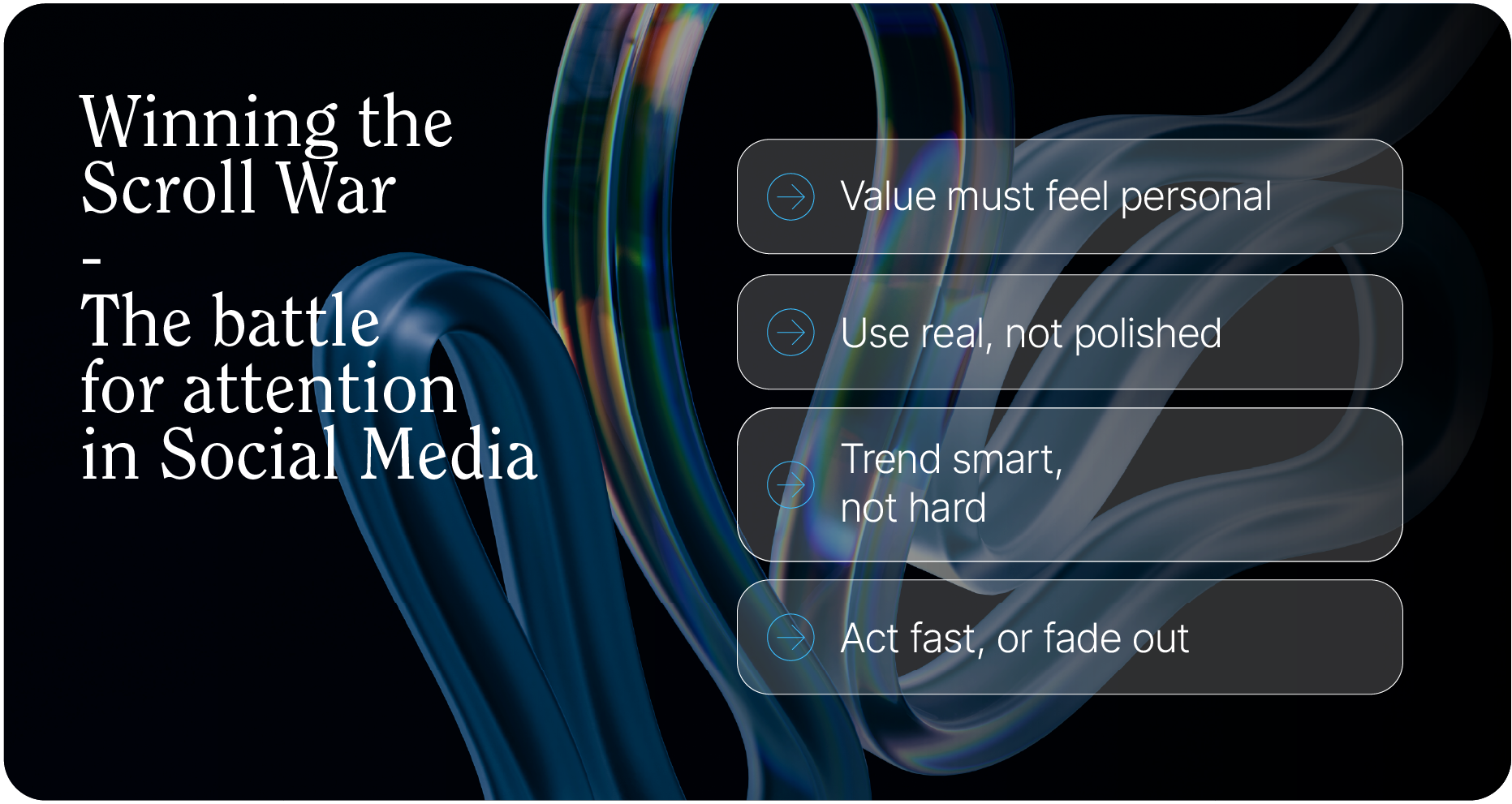
People tend to scroll past graphics that look like ads. They pause when something feels real.
Content based on clever text headlines over stock imagery may have worked during the early stages of social media, but that world has been long left behind now. A shaky phone video, a face or voice they can relate to, a scene that feels unfiltered—these are the things that create presence in a feed full of noise.
Today’s audiences are craving real stories, told by real people, in real places. Whether it’s a content creator sharing a raw opinion, street content in which a real person gets interviewed at a public spot or a brand’s founder speaking from their kitchen, this kind of authenticity can’t be faked. And it connects on a level no perfectly lit studio ever will.
Today, imperfect but honest beats polished but empty.
Deliver Early, Not Late
When crafting a video promoting your brand, product or service, it’s tempting to build towards a big reveal, to save the best for last. But in social media, last often never comes.
As we already mentioned, most people don’t finish videos (at least not the ones they come across while scrolling on social media). They drop off early, often in the first few seconds. So if your message is sitting patiently at second 34, there’s a high chance no one’s sticking around to hear it.
That doesn’t mean cramming your CTA into the opening frame, but it does mean rethinking structure. Start with what matters, lead with the “why” or the core problem you solve, trim any seconds from your video (especially at the beginning) that are not strictly necessary, give people a reason to care immediately, and then build context around that.
Ride the trends that ride with you
Yes, jumping on the latest trend in hope of going viral or getting that precious extra reach is tempting. But audiences are getting sharper, and they can smell inauthenticity from a mile away.
In the last few months, a quick succession of social media trends featuring AI elements took place during a very short period of time (like for example the AI-generated action figure trend, several “italian brainrot” trends and many more). Some brands rushed to participate, eager to surf the wave before it faded (even if it meant stretching their messaging to fit a trend that didn’t quite belong to their world). Others completely missed the moment, either because they weren’t paying attention or lacked the agility to respond in real time. And then there were those that chose carefully: jumping in only when the trend organically aligned with their brand voice, product/service, or audience’s mindset. This is where the real difference lies.
Being present and culturally aware doesn't mean reacting to everything. It means knowing which trends are worth riding, and which are better left alone. When done right, trend participation can feel like a natural extension of a brand’s personality. When done poorly, it feels like someone crashing a party they weren’t invited to (insert Steve Buscemi’s ‘How do you do fellow kids’ meme here).
That’s why staying alert is non-negotiable, but reacting to every trend is not a strategy. Brands should approach trends carefully. The key is to evaluate:
- Does this trend align with our values or tone?
- Can we add something original to the conversation?
- Will our audience genuinely relate to this—or will it feel forced?
Jumping into trends for the sake of visibility alone can create short-term noise, but long-term confusion. The brands that win are those who know when to speak and when to listen. Use Analytics to understand what truly works
If attention is your most valuable asset, retention is your most honest metric. Enter each platform’s Analytics and start tracking average watch time across your content, not just reach and likes.
For how long are people watching your videos? Which ones are people actually finishing? Where do they drop off? Do they stay long enough to hear about your product/service or do they drop off long before that?
These signals tell you what’s resonating. They expose patterns in how your audience consumes, what holds their focus, and what makes them click away. Learn what earns their time, and keep building on that.
Use Social Listening to understand what people actually want
You can’t create valuable content if you don’t know what your audience values.
That’s where social listening becomes more than a marketing tool. It becomes an act of empathy. It’s how you detect not just what your audience is clicking on, but what they’re feeling, needing, craving.
What are they sharing organically? What kind of comments spark conversation? What language do they use? What trends are they resonating with?
Listening fuels relevance. It helps brands stop throwing random elements at their audience blindly, and start posting what they actually want to see.
Final thoughts: The scroll is ruthless, but not unbeatable
There’s no guaranteed formula. No secret sauce. No perfect timing. But there is a way to matter. It starts by understanding that behind every scroll there is a person. Busy, distracted, looking for something that feels worth stopping for. And while algorithms change and trends come and go, the one constant is people. What they value. What they pause for. What they remember.
The creators and brands who win aren’t the ones who post the most. They’re the ones who make each content count, by listening better, experimenting smarter, providing real value and respecting their audience’s time by making the most out of every second.
Because in a world of endless content, attention is not given. It’s earned, second by second.