
In the creative industry, professional development is no longer a luxury—it is an essential investment in the future. Organizations that aim to attract and retain top talent must offer more than just a job. They need to provide purpose, continuous learning opportunities, and a well-defined path for growth. Talent development should be embedded within the organizational culture, enabling teams to evolve, thrive, and lead in today’s dynamic world.
One of the most significant challenges businesses face is defining clear growth paths for employees. Questions like, “What’s my next step?” or “What skills should I develop next?” are constant. While the answers aren’t always simple, organizations that prioritize team development gain a competitive edge.
Establishing a professional growth structure that supports continuous learning and development is essential. Career paths are more than just a strategic tool—they play a fundamental role in strengthening organizational culture, boosting engagement, and fostering talent growth.
CREATING A CAREER GROWTH FRAMEWORK
Building career paths across an entire organization is a complex but crucial process for laying the foundation of professional development. Establishing a strong framework allows for clear focus and effectiveness in development efforts.
Technology can be leveraged to structure career plans that are accessible and transparent. This ensures that employees can review their career trajectory at any time, understand expectations, identify key competencies, and map out the steps necessary for growth.
By doing so, individuals gain confidence in their professional development, cultivating an environment where continuous learning is encouraged, and resources for growth are readily available.

"Career paths are more than just a strategic tool—they play a fundamental role in strengthening organizational culture, boosting engagement, and fostering talent growth".
SKILL-BASED TRAINING: A CORE ELEMENT
At the heart of any career path lies skill-based training. Defining core competencies, specialized skills, and the tools required for each job family ensures that every team member has a clear pathway to progress and reach their full potential. Skill development should be central to the growth process, rather than an afterthought.
INVESTING IN A LEARNING PROGRAM.
A career path without learning opportunities is like a map without a vehicle. Investing in a structured learning program is a critical step—one that should drive both internal and external learning initiatives, ensuring teams remain current with industry trends and cutting-edge practices.
However, learning must be applied. Encouraging talent to practice and apply their knowledge through real-world projects and challenges is essential. Accumulating knowledge is important, but the action that follows is what truly drives growth. Employees should be given opportunities to experiment, fail, and learn from their experiences.
KEY BENEFITS FOR TALENT AND ORGANIZATIONS
A strategic investment in talent development yields measurable benefits:
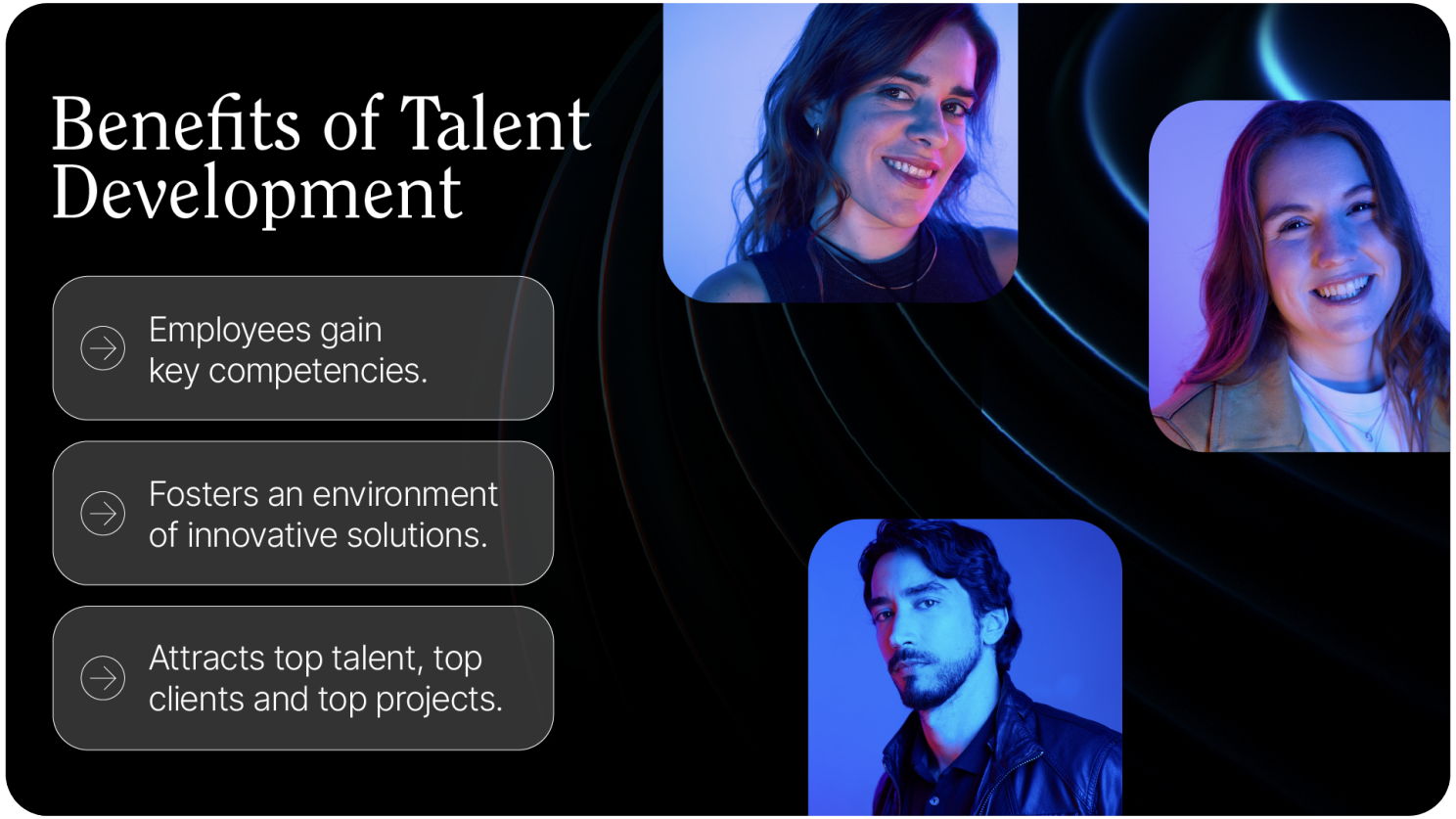
- Skill Development: Employees gain the competencies needed to tackle challenges and deliver greater value to projects.
- Innovation & Creativity: Ongoing learning fosters an environment where innovative and unique solutions are the norm.
- Market Competitiveness: As talent grows, the organization becomes more competitive, attracting top clients and projects.
- Personalized Career Growth: Employees, in collaboration with leadership, can design a learning plan aligned with personal goals and aspirations.
Ensuring that individuals have the necessary tools and resources for continuous growth is a key component of sustainable success.
LEADERSHIP: THE KEY TO GUIDING GROWTH
Having a clear roadmap and the right tools is essential, but effective leadership is the key to turning that plan into action. Once strong foundational structures, such as career paths and learning programs, are in place, leadership must take an active role in guiding teams with clarity and vision.
Empowering leaders with the right tools and support is critical to facilitating team development. Consistent one-on-one meetings, mentoring, and strategic discussions help ensure that employees receive the necessary guidance for growth.
Budget constraints should not limit investment in talent development. Organizations can leverage existing expertise within teams to train and mentor junior talent. This approach accelerates growth while fostering a culture of shared knowledge and collaboration.
BUILDING THE FUTURE TOGETHER
At Creactive Hub, we believe that talent development is the driving force behind long-term success. That’s why we have integrated well-defined career paths, structured learning programs, and strong leadership initiatives to create an environment where every individual can grow and thrive.
Success does not happen by chance—it happens when people are given the right opportunities, tools, and encouragement to evolve. By fostering a culture of continuous learning and innovation, we empower our teams to push boundaries, take on new challenges, and drive meaningful impact.
Now, it’s your turn. Take the next step in transforming your organization by prioritizing professional growth. Invest in career development, create a learning ecosystem, and build leadership that inspires. The future of your company depends on the growth of your people—commit to their success, and you will see your organization rise to new heights. Let’s build that future together.