
The Project Manager is not just a simple task organizer. They are the vital link in an ecosystem where multiple channels and teams coexist, ensuring every piece flows clearly and the brand’s vision is executed consistently and efficiently.
Take influencer marketing, for example: it moves more than $32.55 billion annually worldwide (Influencer Marketing Benchmark Report 2025). And that’s not the only front: today, more than 60% of the global population uses social media (Digital 2024 Report), spending nearly two and a half hours per day on these platforms, while 70% of CMOs plan to keep increasing investment in digital paid media (Nielsen, 2023). The economic and cultural weight of digital disciplines is massive, but they share the same Achilles’ heel: a lack of clear structures. The industry has evolved significantly in recent years, but the problems—though perhaps smaller—remain the same. For years, the PM role was reduced to a purely administrative function, when in reality, to us, it is the guardian of something far more valuable: trust.
And we’re not talking about improvisers. We’re talking about professionals who have already managed hundreds of campaigns, held thousands of conversations with talent and brands, and know how to anticipate problems because they’ve lived through them before—or because they went through a rigorous onboarding process. The industry has matured, and so have the teams: today, the real value lies in accumulated experience that prevents mistakes and leverages solid processes.

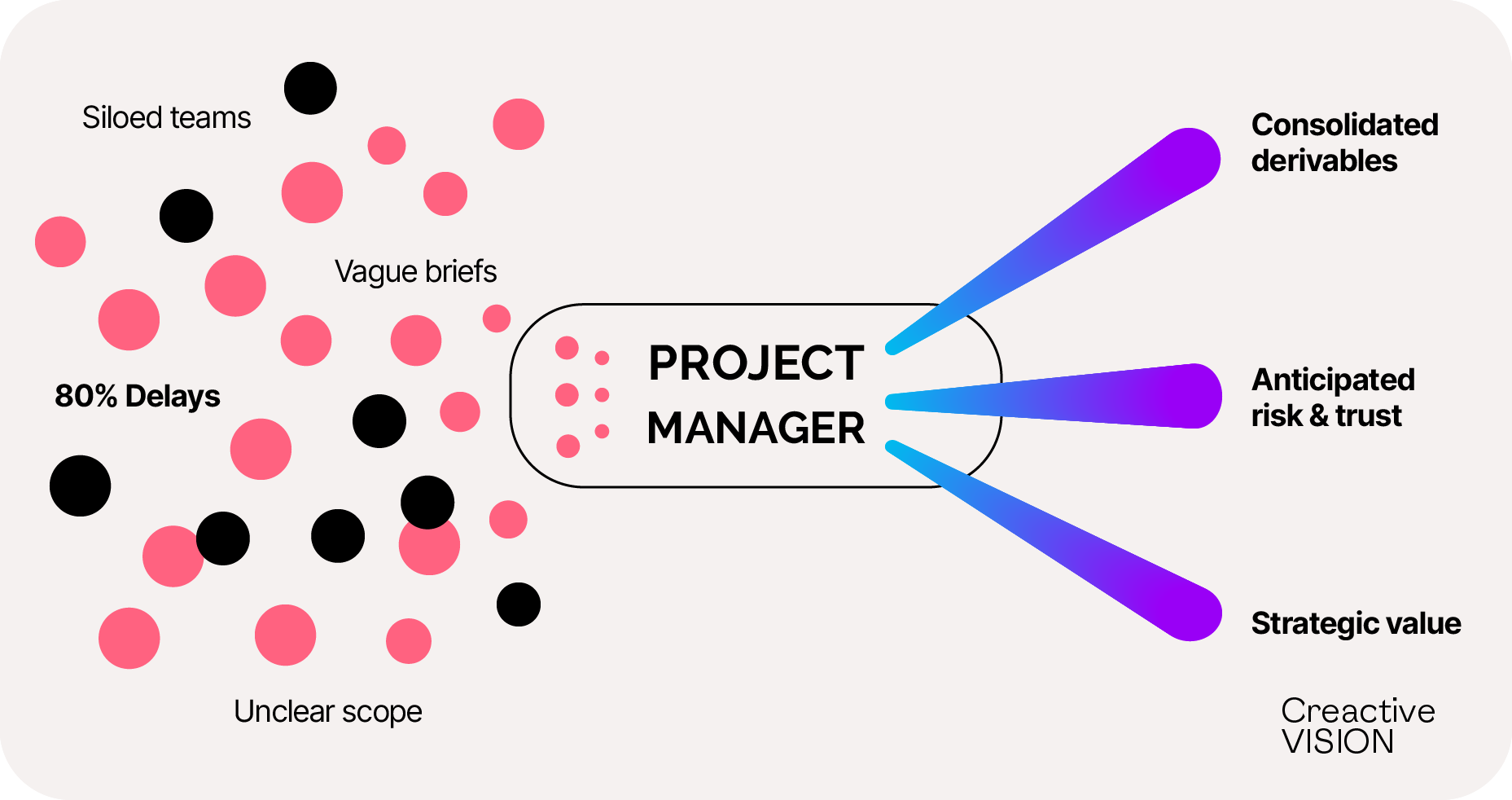
The behind-the-scenes work is rarely glamorous. It’s 10:15 PM, the delivery was due at 6:00 PM, the creator is still tweaking the video, and the client is anxiously waiting. Or it’s a paid media plan with endless revisions no one accounted for. Or a community manager who suddenly needs assets that weren’t in scope. In every case, the PM is that invisible gear that connects the pieces, balances expectations, and ensures the result shines. A study published in Nielsen’s Annual Marketing Report (2023) showed that 80% of digital marketing delays come from unclear briefs and late approvals. That statistic applies equally to influencers, social media, paid media, or any related discipline—and it’s exactly where the PM makes the difference.
At Creactive Hub, we understood that the real value doesn’t lie only in putting out fires but in anticipating them. We’ve already lived through the common industry pitfalls: vague briefs, oversized deliverables, miscalculated timelines, unclear contracts. The difference is that from every misstep, a much more solid workflow has emerged—and the improvement is ongoing. Today, we apply processes that centralize deliveries and approvals, respect the pace and working style of each profile and deliverable, and maintain clear, empathetic communication. Professionalization is not measured in spreadsheets but in the ability to translate experience into methodologies that truly work—learning from every project so the next ones are even stronger.
The next wave of marketing will not be defined solely by creativity or reach, but by orchestration and intelligent planning. Of course, there are tools that merge performance data, dynamic pricing, real-time talent selection, or AI tools that generate content automatically. But without someone to interpret those metrics, translate numbers into strategic decisions, and safeguard the human sensitivity of the process and the deliverables, brands risk reducing their campaigns to nothing more than an Excel sheet or a bot that fails to connect with audiences. At Creactive Hub, we say it clearly: technology and AI enhance, but humans give meaning. Superpowered by experience, sensitivity, and vision.
It doesn’t matter if we’re talking about influencers, paid content, or social media: the real difference lies in those who combine clear processes with creative sensitivity. The PM is that silent architect who connects people, data, AI, and culture. The one who turns improvisation into method and chaos into results. Because at the end of the day, marketing isn’t just about delivering campaigns on time. It’s about creating collaborations that make sense for the brand and for the audience, that generate real value. And that only happens when there’s someone orchestrating with vision, experience, and humanity.